research
Key research directions at the Neural Engineering & Theory Lab.
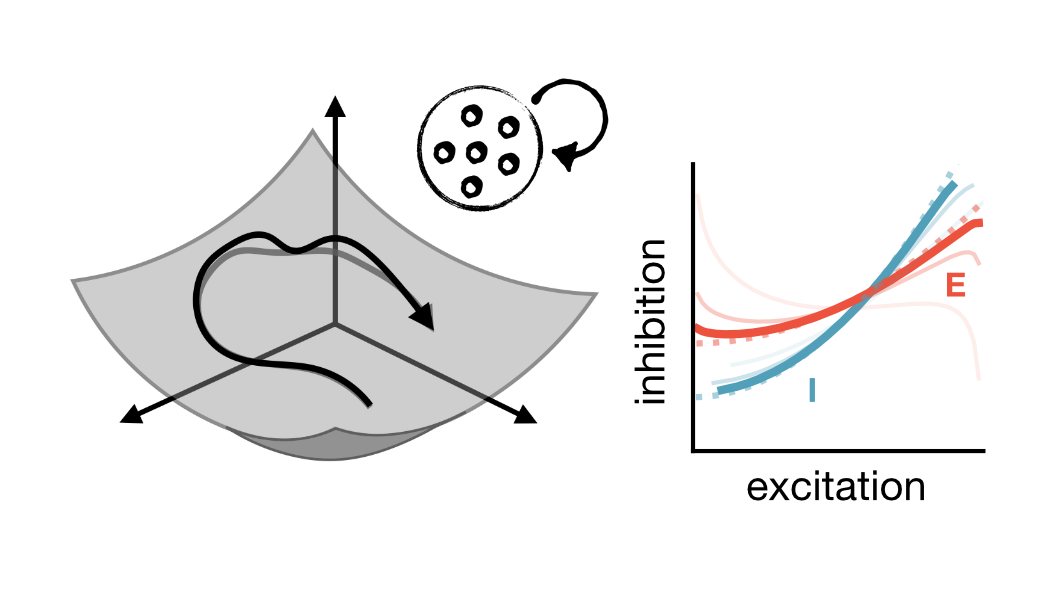
Mechanistic & Functional Models of Neural Circuits
How do neural network dynamics support cognition, and how are the dynamics and representations affected by biophysical details like spike-based communication, excitatory and inhibitory cell types, and energy constraints? We build and study recurrent network models of perception, decision making, and memory to answer these questions.
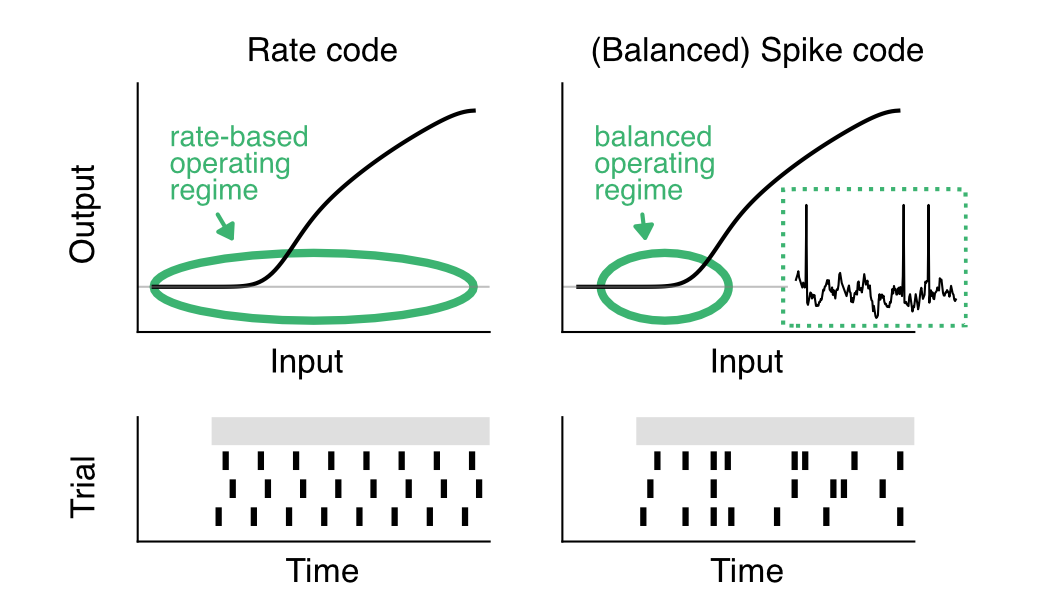
Spiking Neural Networks
Most biological neurons communicate with action potentials, or spikes, but most of our models and computing hardware operate on continuous signals. We consider what makes spike-based computation special and what new theoretical frameworks might be needed to understand them. We then apply this to spiking network simulations and consider implications for neuromorphic computing.
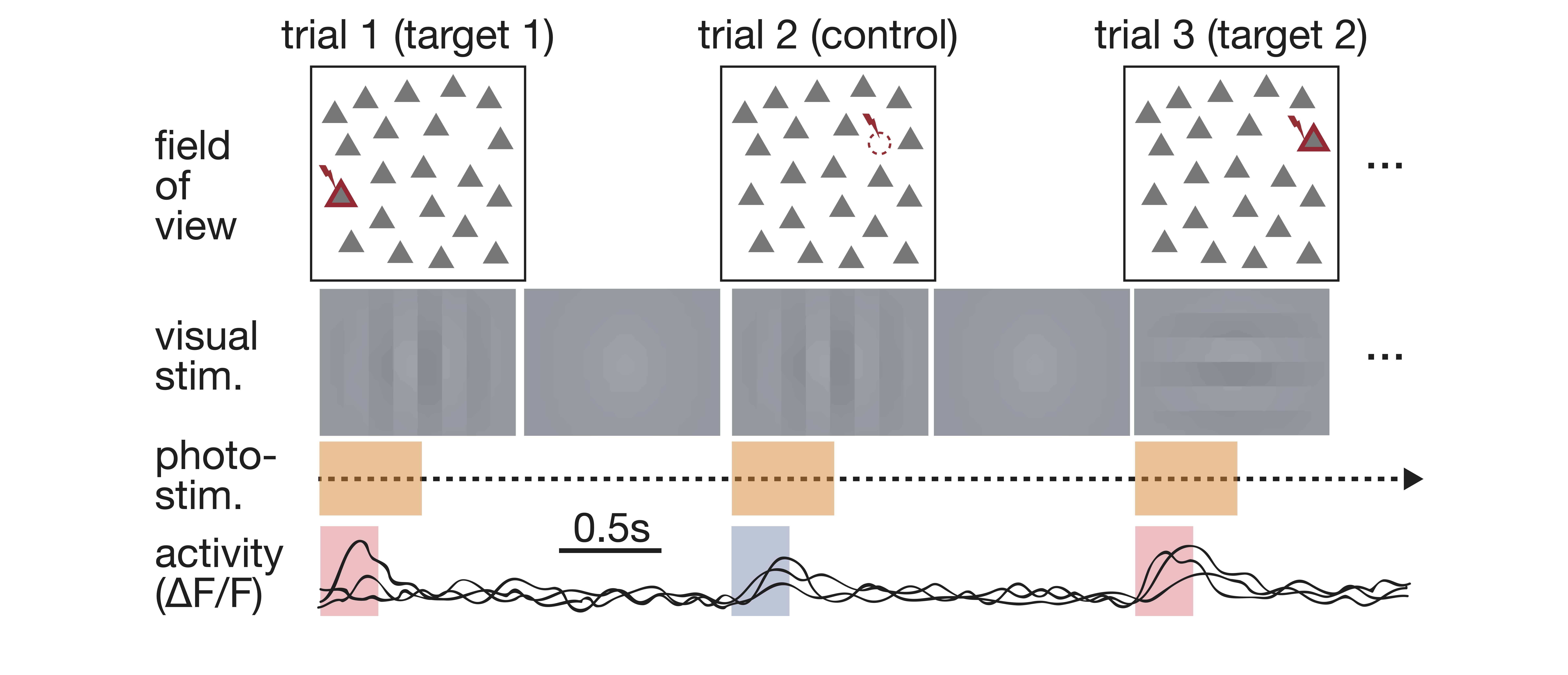
Neural Data Analysis
A key component of generating theories in neuroscience is testing them with data. We aim to test our theories and computational models by analyzing neural population data, such as electrophysiology and calcium imaging, and working with experimental collaborators across a wide array of systems and scales.
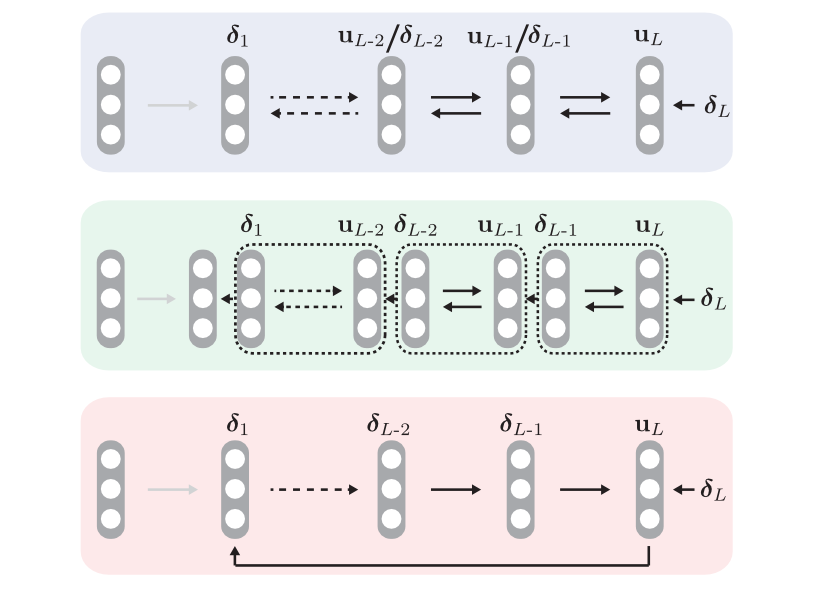
Neuro-AI & Machine Learning
What are the similarities and differences between biological and artificial network architectures and learning algorithms? How can AI systems be made more efficient and brain-like? We explore these questions by building and analyzing bio-inspired machine learning models.